What Is Artificial Intelligence? Essential Facts for Everyone
Published: 13 Jan 2026
Artificial intelligence is everywhere today, yet many people still feel unsure about it. You might hear about it in apps, smartphones, or online platforms and still wonder, what is AI, and why does it matter so much? If this sounds familiar, don’t worry.
In this guide, I will clear up the confusion step by step and explain what AI is, why people talk about it so often, and how it connects to everyday technology in a simple and easy-to-understand way.
What Is Artificial Intelligence?
Artificial intelligence is a group of technologies that allows machines and computer programs to act in ways that seem smart. These systems can learn from information, recognize patterns, and make decisions faster than humans can on their own. AI is not just one tool or program. It is made up of many algorithms, models, and software systems designed to solve problems, perform tasks automatically, and help people make better decisions.
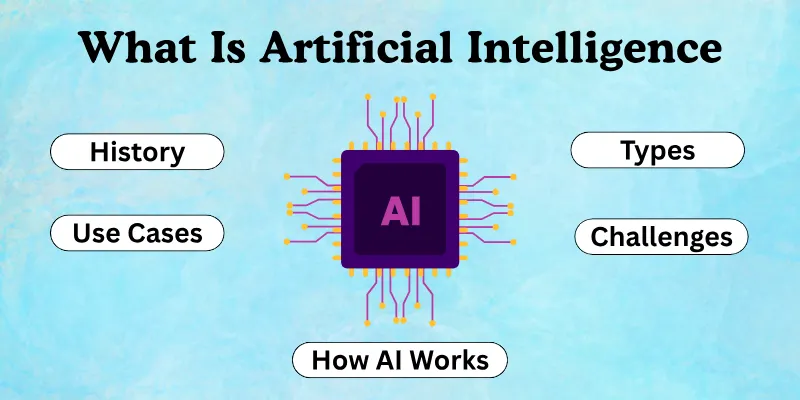
It covers many areas like computer programming, data analysis, and understanding human language. For example, modern AI tools can help create content, edit photos and videos, answer questions, organize information, and even assist with everyday tasks efficiently.
History of Artificial Intelligence
The idea of creating machines that can think and learn like humans has interested people for many years. From early experiments with simple programs to modern tools that can handle complex tasks, the journey has been long and exciting. Researchers have faced many challenges but also achieved remarkable breakthroughs along the way.
Here are some important milestones in the history of this field:
- 1950s – Early Ideas: Thinkers began exploring whether machines could mimic human thinking and perform tasks using logic and rules.
- 1956 – The First Workshop: A meeting at Dartmouth College marked the official start of research in this area. Scientists shared ideas and set the foundation for future work.
- 1960s-1970s – Initial Programs: Early programs could solve puzzles, play games, and follow simple rules. Progress was slow due to limited computer power.
- 1980s – Challenges and Setbacks: Interest declined as machines failed to meet high expectations, leading to a period called the “AI winter.”
- 1990s-2000s – Growth: Faster computers and more data allowed machines to recognize patterns, understand basic language, and assist with research.
Over time, this technology has become more practical and widely used. Today, it supports many tools we rely on in daily life and continues to grow, opening new possibilities for the future.
How Does AI Work?
The systems learn from data and experience. They analyze large amounts of information to find patterns and make decisions based on what they observe.
Let’s see how AI works:
- Collecting Data: The system begins by gathering information from many sources, such as text, images, or numbers. This data forms the foundation for learning. Without enough information, it cannot make accurate decisions.
- Finding Patterns: Next, it looks for trends and connections within the data. By recognizing patterns, it can understand how things relate to each other. This step helps it make predictions or suggestions.
- Making Decisions: Using the patterns it finds, the system can suggest solutions or take actions. It applies what it has learned to solve problems effectively. These decisions can range from simple tasks, like sorting information, to more complex ones, like predicting trends.
- Improving Over Time: The system gets better as it processes more information. Each new example helps refine its understanding and accuracy. Over time, it can handle more complicated tasks and adjust to changes in the information it receives. Continuous learning makes it more reliable and useful.
- Following Rules: People set instructions and limits to guide their actions. These rules ensure it works safely and efficiently. Following guidelines also prevents mistakes and helps it stay on track, especially when dealing with sensitive or important tasks.
Types of Artificial Intelligence
There are two main ways to classify these systems based on their abilities and functionality. Here are the types explained clearly:
By Capability
Not all systems work the same. Some focus on a single task, while others can handle many. Grouping them by capability shows what each can do and its limits.
Let’s take a closer look at the different types based on their abilities:
- Narrow Intelligence: Handles one specific task and cannot operate beyond its purpose.
- General Intelligence: Can theoretically perform multiple tasks and learn like a human.
- Super Intelligence: A future concept where systems could exceed human abilities in all areas.
By Functionality
Systems can also be grouped by how they operate and use information. This helps us understand the way they think, learn, and respond in different situations.
Let’s explore the main types based on their functionality:
- Reactive Machines: Respond to immediate situations using fixed rules, with no memory of past events.
- Limited Memory: Uses past experiences briefly to make better decisions, like in self-driving cars.
- Theory of Mind: Could understand emotions, intentions, and social interactions (still experimental).
- Self-aware: Would have awareness and consciousness like humans (currently theoretical).
Use Cases of AI
Modern tools are helping people and businesses in many areas. They improve organization, speed, and ease of use. Here are some practical examples of how they are used today.
- Healthcare Assistance: Modern systems help doctors and medical staff analyze patient information quickly. They can spot patterns in test results and suggest possible conditions, making healthcare faster and more accurate.
- Financial Support: Banks and financial companies use technology to detect unusual activity, manage transactions, and provide better guidance for customers. This helps prevent mistakes and improves decision-making.
- Education and Learning: Tools can help teachers and students by organizing study materials, providing personalized learning suggestions, and tracking progress. This makes learning more interactive and efficient.
- Daily Life Helpers: Everyday tools can schedule appointments, answer questions, and organize tasks. They make daily routines simpler and save time for people.
- Technical Work: Software can assist in writing, designing, editing photos, and analyzing large amounts of data. It helps professionals complete complex projects faster and with more precision.
Challenges and Risks of Artificial Intelligence
While modern systems bring many benefits, they also come with challenges and risks. Understanding these helps people use them safely and responsibly.
- Technical Limitations: Systems can make mistakes if the information they use is incomplete or incorrect. They are not perfect and need human supervision.
- Bias and Fairness: If the information used to train them is biased, the results can also be unfair or inaccurate. This can affect decisions in important areas like hiring or finance.
- Privacy Concerns: Collecting and analyzing large amounts of information can lead to privacy issues. People need to be careful about how their data is used.
- Overreliance on Technology: Depending too much on these systems can reduce human skills and decision-making ability over time.
- Ethical Issues: There are questions about accountability and responsibility when a system makes a wrong decision or causes harm.
Overall, while these systems are helpful, it’s important to use them carefully, monitor their outputs, and address these challenges responsibly.
The Role of AI in the Modern World
This technology plays a key role in shaping how modern systems operate and evolve. It helps manage complexity, handle large volumes of information, and support smarter processes across digital environments. Instead of replacing humans, it works as a supporting layer that enhances efficiency and structure.
Its presence influences how information is processed, how systems adapt to change, and how data guide decisions. Many modern platforms rely on it to remain accurate, responsive, and scalable.
As technology continues to evolve, I believe its role will become even more natural and integrated. It is gradually turning into a foundation of modern digital life rather than something separate or unfamiliar.
Conclusion
In this guide, we explored what is AI and how it works, the different types, and its uses, benefits, and challenges. We’ve seen how it helps in daily life, work, learning, and many other areas.
From my perspective, it’s important to understand these systems and use them wisely, because they can guide better choices and improve daily activities. Being aware of their limits is just as important as knowing their benefits.
Keep exploring and stay curious. There’s always something new to learn and discover.
FAQs
Here are some of the most commonly asked questions related to what is artificial intelligence:
AI refers to systems that can perform tasks usually requiring human thinking, like recognizing patterns, processing information, and making decisions. These systems help in many areas we use daily:
- Smartphones and apps.
- Online search and recommendations.
- Voice assistants and chat tools.
- Automation in business.
The full meaning of Artificial Intelligence (AI) is the development of systems that can perform tasks similar to human thinking and decision‑making. It includes learning from information and adapting to new input. People use this term when talking about smart technologies in software and machines.
It works by collecting information, finding patterns, and making decisions based on those patterns. The process usually involves:
- Gathering data from different sources.
- Recognizing trends and connections.
- Making decisions or predictions.
- Improving over time as more data is processed.
It helps companies handle large amounts of information and make predictions based on trends. It can support decision-making, improve service quality, and automate routine work. Businesses also use it to personalize customer experiences.
Many tech companies, research labs, and university teams are creating and improving these systems. Big tech firms work on advanced projects, but smaller developers also build useful tools and programs. Collaboration between industry and academia pushes the field forward.
Yes, many tools are designed for regular users. You can find it in everyday applications like:
- Voice assistants on phones.
- Photo tagging and organizing apps.
- Smart home devices.
- Online recommendation features.
For most common tasks, it is safe when used responsibly. However, users should be careful about privacy and personal data. It is important to understand what information you share and how it is used.
Many tools are designed to be simple for anyone to use. Beginners can start by exploring apps, online tools, and digital assistants that help with daily tasks. Practicing with these tools gradually builds familiarity.
It can take over repetitive or routine tasks, but it cannot fully replace human creativity, judgment, or emotions. Its main role is to assist humans and make work more manageable.
It is used across many industries to make work faster and smarter. Common areas include:
- Healthcare for managing patient information.
- Education for personalized learning tools.
- Finance for tracking transactions and trends.
- Retail for recommending products to customers.




- Be Respectful
- Stay Relevant
- Stay Positive
- True Feedback
- Encourage Discussion
- Avoid Spamming
- No Fake News
- Don't Copy-Paste
- No Personal Attacks
- Be Respectful
- Stay Relevant
- Stay Positive
- True Feedback
- Encourage Discussion
- Avoid Spamming
- No Fake News
- Don't Copy-Paste
- No Personal Attacks
