The Future of AI: What to Expect in the Next 10 Years
Published: 20 Jan 2026
The future of AI will play a major role in shaping how people work, learn, and make decisions. AI already helps organizations improve efficiency, manage information, and support better outcomes. Using AI in a responsible and informed way will become essential.
Its presence will continue to grow in the coming years. Understanding these changes early allows individuals and businesses to stay prepared and make confident decisions about the future.
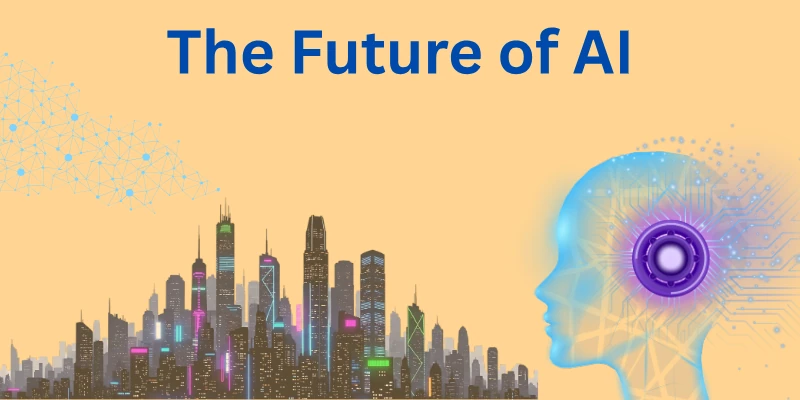
I will explain the future of AI, discuss the key trends shaping it, explore its impact across industries, and highlight what to expect in the next five to ten years.
The Current Landscape of AI
The world of AI is evolving faster than ever. AI adoption has grown across various industries, transforming how businesses and individuals work. Breakthroughs, like generative AI and large language models, allow machines to understand, create, and communicate in ways once impossible. Companies are moving AI from research labs to real-world applications, making technology more practical and accessible.
From automating tasks to enhancing decision-making, AI is becoming a daily tool rather than a distant concept. Experts predict this trend will continue, with smarter and more efficient AI systems emerging soon.
AI Predictions: What to Expect in the Next 5–10 Years
As AI continues to evolve, it will impact industries, daily life, and global systems in ways we are only beginning to see. Over the next 5 to 10 years, AI will become more integrated, intelligent, and adaptive. Here are some predictions for the future of AI and how it may reshape different sectors.
Generative AI Transforming Industries
Generative AI will play a central role in creating content, simulations, and solutions across sectors.
- Businesses may use it to forecast trends and optimize resources.
- Healthcare teams could simulate treatment plans for complex conditions.
- Retailers might predict customer demand and manage inventory efficiently.
Next-Gen AI Technologies
New AI tools will handle multiple types of data and make decisions in real time.
- Edge AI will allow devices to act instantly, like smart traffic systems or emergency drones.
- Adaptive learning systems will help education platforms customize lessons.
- AI-enabled public services will respond faster and more efficiently.
AI in Robotics and Automation
AI will enhance robots’ flexibility and performance across various tasks.
- Warehouse robots may manage stock and deliveries independently.
- Manufacturing robots can adjust to design or process changes automatically.
- Automation will handle routine and unpredictable tasks, freeing humans for complex work.
AI’s Role in Business Growth
Organizations will rely on AI to plan, simulate, and innovate.
- Finance companies could model market scenarios to reduce risk.
- Enterprises may anticipate challenges and optimize operations proactively.
- AI will act as a strategic partner for growth and innovation.
These predictions highlight that AI is not just about technology; it will transform society, work, and opportunities, and preparing early will be essential to benefit fully.
Key Areas Where AI Will Transform the World
AI is reshaping industries by improving efficiency, streamlining operations, and creating new opportunities. These changes highlight the specific ways AI is shaping work and daily life across sectors.
- Healthcare: AI accelerates diagnosis, predicts treatment outcomes, and enables personalized care plans, showing the potential of artificial intelligence in medical innovation.
- Education: AI provides tailored learning experiences, supports virtual tutoring, and helps monitor student progress to enhance learning outcomes.
- Economy & Jobs: AI automates routine tasks, generates new roles, and encourages upskilling, illustrating how AI is changing workforce dynamics.
Business & Innovation: AI drives product innovation, optimizes workflows, and improves operational efficiency. - Media & Creativity: AI assists in content creation, enhances design and creative processes, and enables new forms of artistic expression, reflecting the growing artificial intelligence potential in creative industries.
AI’s impact across these industries shows that early adoption and adaptation are key to taking advantage of new opportunities while preparing for challenges.
Social and Ethical Implications
As AI expands across industries and into daily life, it brings important social and ethical considerations. These factors shape how technology is applied and how people interact with AI systems.
- Bias and Fairness: Artificial intelligence systems can unintentionally favor certain groups, making fairness and equality a priority.
- Transparency: A clear understanding of AI processes ensures trust and reduces errors in critical applications.
- Data Privacy: Protecting personal information is essential as AI handles large amounts of sensitive data.
- Accountability and Safety: Monitoring AI systems and ensuring responsible use protects human values and minimizes harm.
Exploring the possibilities of AI responsibly and ethically will help society benefit from innovation while avoiding potential risks.
AI’s Impact on Careers and Skills
AI is transforming the way people work and learn. It is reshaping careers, changing the skills that are in demand, and creating new ways for humans and machines to collaborate. Understanding these changes helps professionals prepare for the AI-driven future.
- Jobs: AI will automate repetitive tasks, but it will also create new roles in AI management, data analysis, and digital services. Workers who embrace these changes will find more opportunities and job security.
- Skills: Digital literacy, critical thinking, and problem-solving will become essential. Learning to use AI tools effectively will help professionals stay competitive and grow in their careers.
- Education & Learning: Traditional learning is shifting to include AI-based tools and online platforms. Continuous learning and upskilling will be crucial to keep pace with technological changes.
- Workforce Adaptation: Organizations and employees must adapt to AI integration in workflows. Flexibility, willingness to learn, and collaboration with AI systems will drive productivity and innovation.
- Career Growth Opportunities: AI will open paths for specialized careers in emerging technologies. Those who gain AI expertise and combine it with human creativity will lead in innovation and leadership roles.
Conclusion
In this guide, I explained the future of AI and how it is changing our jobs, skills, and daily lives. Personally, I find it exciting to see humans and AI learning to work together; it feels like we’re entering a whole new era of creativity and possibilities.
My tip for you is simple: stay curious, keep learning, and don’t be afraid to explore AI tools that can make your work smarter and more enjoyable. Thanks for reading, and I hope this guide gives you a clear picture of the AI-driven future. Wishing you all the best on your journey with AI!
FAQs
Here are some of the most commonly asked questions related to the future of AI.
The future of artificial intelligence focuses on smarter systems that can learn, adapt, and assist humans. AI will become more common in daily tools, workplaces, and decision-making. Its goal is to improve efficiency, accuracy, and human productivity.
Artificial intelligence and future technology are closely linked because AI drives innovation across industries. From smart cities to advanced healthcare, AI shapes how new technologies evolve. This connection will continue to grow as AI becomes more powerful.
Artificial intelligence will change the world depending on how humans use it. AI will improve healthcare, education, transportation, and communication systems. It will also help solve complex global problems faster than before.
AI will automate repetitive tasks, but it will not remove all jobs. Many new roles will appear that require human creativity, judgment, and emotional intelligence. The future favors people who learn to work with AI tools.
The idea that artificial intelligence will take over the world is mostly science fiction. AI works under human-designed rules and systems. Responsible development and regulation keep AI aligned with human goals.
AI development is advancing rapidly with better models, tools, and applications. Companies and researchers focus on making AI more accurate, efficient, and ethical. This progress supports real-world problem-solving.
Individuals can prepare by learning digital skills and staying curious about new technologies. Using AI tools for daily tasks builds confidence and understanding. Adaptability and lifelong learning are the biggest advantages in an AI-driven future.


- Be Respectful
- Stay Relevant
- Stay Positive
- True Feedback
- Encourage Discussion
- Avoid Spamming
- No Fake News
- Don't Copy-Paste
- No Personal Attacks
- Be Respectful
- Stay Relevant
- Stay Positive
- True Feedback
- Encourage Discussion
- Avoid Spamming
- No Fake News
- Don't Copy-Paste
- No Personal Attacks
