Best AI Tools for Language Learning in 2026 – Free & Paid
Published: 19 Sep 2026
Learning a new language used to mean textbooks, classroom schedules, or paying for a tutor by the hour. That has changed. AI tools for language learning now let you practice speaking, get instant grammar corrections, and build vocabulary on your own schedule, often for free.
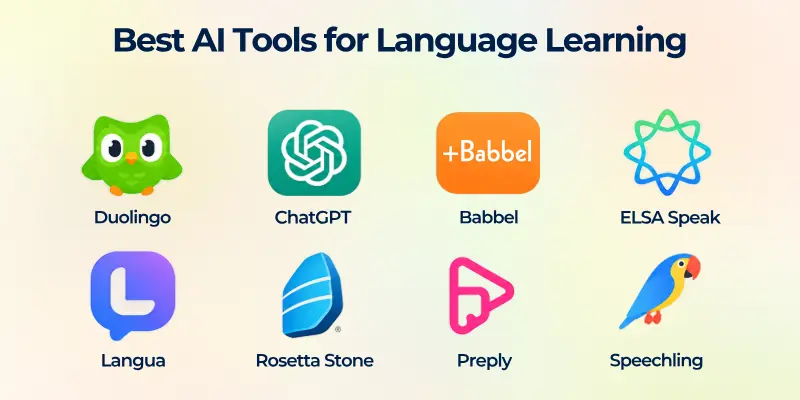
This guide focuses on what each tool does well, where it falls short, who it suits best, and what users can generally expect to pay.
How We Chose These AI Language Tools
We compared these platforms based on their current features, pricing, learning approach, and official product information. The comparison looked at AI-powered features, speaking and pronunciation practice, lesson structure, ease of use, free access, pricing, language coverage, and suitability for different learner levels.
This is not a strict ranking. Different tools are built for different learning needs, so the “right” one depends on what you are trying to improve.
Why AI Tools Work for Language Learning
Traditional classes move at one pace for everyone. Many language-learning tools track your progress and use adaptive practice to revisit words or skills you struggle with, offer feedback on pronunciation, and let you practice a full conversation without the fear of embarrassing yourself in front of a real person.
That does not mean AI replaces human interaction. It means you get more low-pressure practice before you ever need it, which makes real conversations feel less intimidating when they happen.
Best AI Tools for Language Learning
Here is a look at eight options worth knowing about, from free beginner tools to more advanced conversation platforms.
- Duolingo
- ChatGPT
- Babbel
- ELSA Speak
- Langua
- Rosetta Stone
- Preply
- Speechling
Let’s take a closer look at each tool.
1. Duolingo
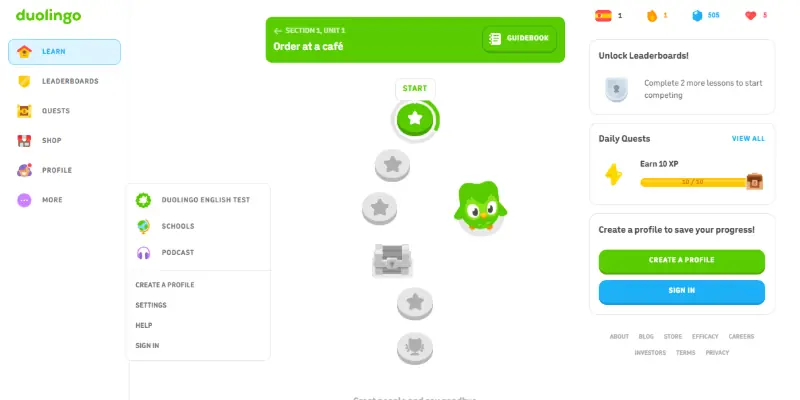
Duolingo is still the most recognized name in language learning, and its gamified format makes it easy to build a daily habit. Its “Adventures” feature is an immersive, story-based mode that drops you into scenarios like ordering food or navigating a train station instead of static exercises. Separately, the higher-tier Duolingo Max plan includes AI-powered features such as Roleplay, Explain My Answer, and Video Call, which use generative AI to simulate conversations and explain your mistakes.
Pros: A genuinely useful free tier, strong habit-building design through streaks and levels, and works well for absolute beginners.
Cons: Speaking practice is limited on the free plan, and the AI-powered features sit behind the more expensive Max tier rather than the standard paid plan.
Best for: Complete beginners who want a low-pressure way to build a daily habit.
Pricing: Free, with paid Super and Max tiers for extra features. Check Duolingo’s site for current rates, since pricing has changed over time.
2. ChatGPT
ChatGPT is not built specifically as an AI language tutor, but if used the right way, it offers a lot of flexibility for language practice. You can ask it to role-play as a native speaker, correct your grammar and explain why something was wrong, or quiz you on vocabulary in context.
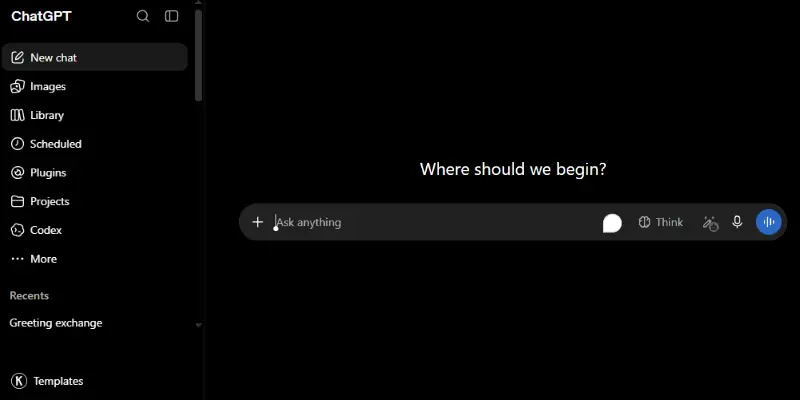
A simple prompt like “act as a native French speaker and have a casual conversation with me about my weekend, correcting my mistakes as we go” turns it into a personal tutor on demand. It helps to tell ChatGPT upfront how you want corrections and feedback delivered, whether that means correcting every mistake immediately or only when you ask, since it will otherwise follow the flow of the conversation rather than teach by default.
Pros: Extremely flexible, works for almost any language, great for grammar explanations and writing practice.
Cons: No structured curriculum or progress tracking, and it will not correct your mistakes unless you specifically ask it to.
Best for: Intermediate to advanced learners who already know what they want to practice.
Pricing: Free plan available; paid plans offer higher usage limits and additional features.
3. Babbel
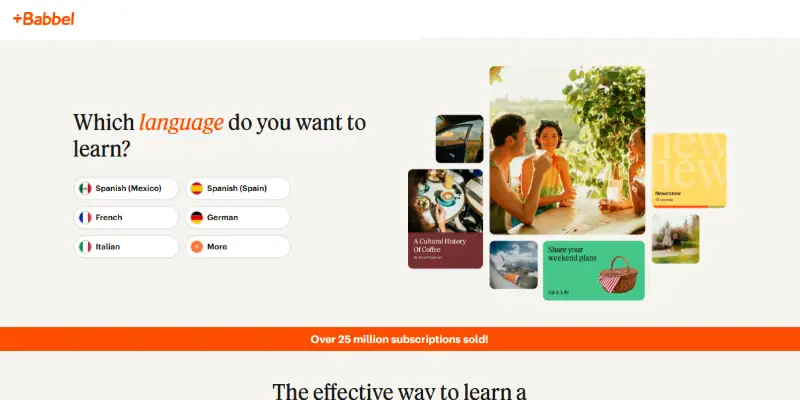
Babbel takes a more structured, curriculum-driven approach than Duolingo. Lessons are built around real situations, like job interviews or travel, and grammar rules are explained directly instead of left for you to guess. On the technology side, Babbel includes AI-enhanced speech recognition that analyzes your pronunciation against recorded speech samples and a feature called Babbel Speak, which walks you through guided speaking scenarios with AI-generated prompts and feedback.
Pros: Clear grammar explanations, practical and current vocabulary, short and focused lessons, and AI speech recognition built into pronunciation practice.
Cons: No free tier, it covers fewer languages than some competitors, and the AI-guided speaking scenarios are structured rather than fully open-ended conversation.
Best for: Adults who want a structured path and do not need gamification to stay motivated.
Pricing: Paid subscription, with monthly and annual options.
4. ELSA Speak
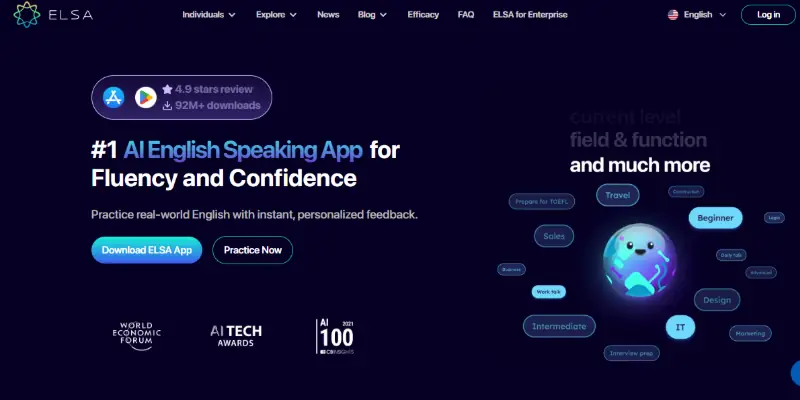
ELSA Speak focuses on pronunciation, using AI-powered speech recognition to analyze how you say words and phrases and give real-time feedback on accent-specific mistakes.
Pros: Detailed pronunciation feedback, short daily exercises, useful for professional English learners.
Cons: Focused mainly on English, and it is not a complete language-learning solution on its own.
Best for: Learners who already understand a language but want to sound more natural when speaking it.
Pricing: Free tier available, with paid plans for full features.
5. Langua
Langua is built specifically for AI conversation practice, using voices modeled to sound less robotic than some competing apps. It gives feedback in multiple forms, including written corrections, verbal corrections during the conversation, and a summary report afterward.
Pros: Multiple feedback formats in one conversation, and it lets you choose your regional dialect for many languages.
Cons: Covers fewer languages than some larger platforms, and conversation-based practice can feel intimidating for absolute beginners.
Best for: Learners who want AI conversation practice with detailed, multi-format feedback.
Pricing: Free trial available, then a paid subscription.
6. Rosetta Stone
Rosetta Stone has been around for decades, and its immersion-based method still works the same way: you learn through context and repetition, without relying on translation. Its role in an AI-focused list comes from TruAccent, its speech recognition technology, which compares your pronunciation in real time against recordings from native speakers and scores specific sounds.
Pros: Pronunciation practice built into nearly every lesson through TruAccent, true immersion without a translation crutch, and a lifetime plan option for long-term value.
Cons: The immersion method can frustrate beginners who want explicit grammar rules explained directly.
Best for: Learners who want to think directly in their target language rather than translate from their own.
Pricing: Monthly subscription or a one-time lifetime plan.
7. Preply
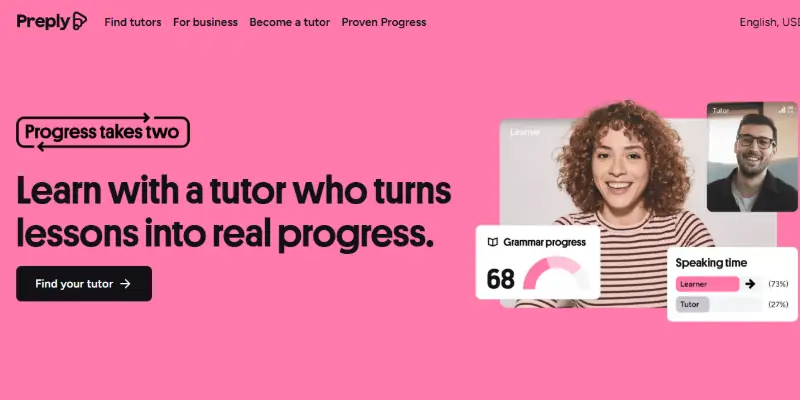
Preply is primarily a marketplace connecting you with human tutors, but its AI layer adds value between sessions. It generates AI lesson summaries and insights based on your tutoring sessions, which can help reinforce what came up in your last lesson and prepare you for the next one.
Pros: Combines the accountability of a human tutor with AI reinforcement, a large tutor marketplace, and flexible scheduling.
Cons: Cost varies widely depending on the tutor, and the AI features are designed to support tutor sessions rather than function as a standalone learning tool.
Best for: Learners who want human instruction with artificial intelligence support in between lessons.
Pricing: Pay-per-session, priced by tutor.
8. Speechling
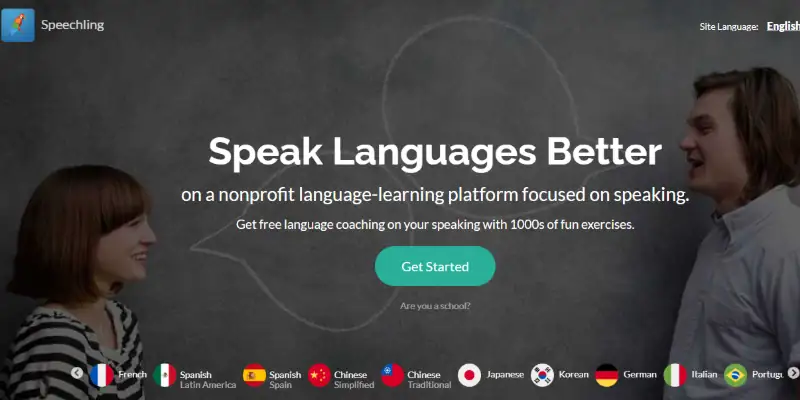
Speechling combines technology-based speech analysis with optional human coach feedback, at a much lower cost than private tutoring. You record yourself speaking, the app gives automated feedback, and on the paid plan, a human coach also reviews your recordings.
Pros: Affordable, real human feedback available at a low price point, simple and distraction-free interface.
Cons: Smaller language selection than most competitors, and it requires more self-motivation since it is less gamified.
Best for: Budget-conscious learners who still want real feedback on their speaking.
Pricing: Free tier available, with an affordable unlimited plan.
Comparison Table
Here’s a quick side-by-side look at all 8 tools before we get into how to choose between them.
| Tool | Best For | Free Tier | Paid Option |
|---|---|---|---|
| Duolingo | Absolute beginners | Yes | Free, with paid Super/Max tiers |
| ChatGPT | Flexible conversation practice | Yes | Free, with a paid Plus tier |
| Babbel | Structured adult learners | No | Paid subscription, varies by plan length |
| ELSA Speak | Pronunciation and accent | Yes | Free, with paid tiers for full features |
| Langua | Natural-feeling AI conversation | Trial only | Paid subscription |
| Rosetta Stone | Full immersion learners | No | Paid subscription or lifetime plan |
| Preply | Human + AI combination | No | Pay-per-session, varies by tutor |
| Speechling | Budget speaking practice | Yes | Free, with an affordable paid plan |
How to Choose the Right AI Tool for You
The right choice depends less on which tool is “best” overall and more on your current level and what you are trying to improve.
- Beginners: Duolingo offers a low-pressure, gamified way to start building vocabulary and basic structure.
- Structured learning: Babbel gives you a curriculum built around real-life situations, with grammar explained directly.
- Grammar: ChatGPT can explain grammar rules in detail and answer follow-up questions on demand.
- Conversation practice: ChatGPT for language learning and Langua both offer flexible, low-pressure speaking practice.
- Pronunciation: ELSA Speak and Rosetta Stone both focus on pronunciation, using speech recognition to give feedback on specific sounds.
- Human tutoring: Preply combines live tutors with AI support between sessions.
- Budget-friendly learning: Duolingo, ChatGPT, and Speechling all offer usable free tiers or low-cost paid plans.
Can You Combine Multiple AI Tools?
Yes, and for many learners this works better than relying on a single app. A common approach is pairing a structured tool like Babbel for grammar and vocabulary with a conversation-focused tool like ChatGPT or Langua for speaking practice, and adding ELSA Speak if pronunciation needs extra attention.
No single app covers reading, writing, listening, and speaking equally well, so combining two tools that cover different weak spots can provide more balanced practice across different language skills than sticking to one.
Final Thought
This guide compared eight AI language learning tools, from beginner-friendly apps like Duolingo to AI conversation platforms like Langua and pronunciation-focused tools like ELSA Speak, based on their current features, pricing, and learning approach.
There is no single best AI tool for every learner. Duolingo and Babbel work well for building a foundation, ChatGPT and Langua support AI conversation practice, and ELSA Speak or Rosetta Stone focuses on pronunciation. Match a tool to the specific skill you want to improve, use it consistently, and add a second tool only once you know exactly what gap it needs to fill.
FAQs
Here are some frequently asked questions about AI tools for language learning.
AI tools can help you reach a solid conversational level, but full fluency usually still requires real-world practice, such as:
- Talking with native speakers
- Traveling or living where the language is spoken
- Consuming media in the language
Yes, especially for intermediate and advanced learners who already know what they want to practice. It handles grammar explanations well, but it will not correct your mistakes unless you ask.
Duolingo’s free tier and ChatGPT’s free version are both genuinely useful starting points, though premium plans unlock more depth.
This varies by person, language, and practice frequency, so there’s no fixed timeline. Many learners report:
- Noticing real progress after a few weeks of consistent daily practice
- Understanding more and feeling less anxious using the language early on
- Needing considerably longer for full fluency
Not necessarily, but combining two tools that cover different skills, like grammar and conversation, can support more balanced progress.
Duolingo can be a practical starting point for complete beginners who prefer short, gamified lessons.
Not entirely. AI tools are useful for:
- Daily practice
- Low-pressure conversation
- Instant feedback
They still miss the nuance and real connection a human tutor offers.
ELSA Speak is particularly focused on pronunciation and AI-powered speaking feedback. Rosetta Stone is another option through its TruAccent scoring.
Duolingo is a strong starting point for vocabulary and basic structure, but its speaking practice is limited, especially on the free plan.
- Be Respectful
- Stay Relevant
- Stay Positive
- True Feedback
- Encourage Discussion
- Avoid Spamming
- No Fake News
- Don't Copy-Paste
- No Personal Attacks
- Be Respectful
- Stay Relevant
- Stay Positive
- True Feedback
- Encourage Discussion
- Avoid Spamming
- No Fake News
- Don't Copy-Paste
- No Personal Attacks
