The 10 Best AI SEO Tools That Actually Improve Search Rankings
Published: 11 Jan 2026
Today, search results change every week, and speed decides winners. I tested dozens of platforms on live sites and client projects this year. AI SEO tools helped me cut my research time in half and increase organic clicks across multiple niches.
I write this from real use, real budgets, and real rankings, not theory. These tools analyze keywords, track competition, and even suggest content improvements instantly. If you want to save time and get measurable results, knowing the right tools makes all the difference.
In this article, I will cover the best AI SEO tools and show exactly how each can boost your SEO results.
Let’s dive in and explore the tools that deliver real SEO results.
Best AI SEO Tools
SEO is constantly evolving, and marketers need smarter strategies to stay ahead of search trends. I’ve explored several platforms in real campaigns, and some truly help boost traffic, improve rankings, and simplify research.
Here are some tools that can make a real difference for your SEO strategy:
- Semrush
- Surfer SEO
- Mangools
- Ahrefs
- Frase
- Clearscope
- RankIQ
- NeuronWriter
- SE Ranking
- MarketMuse
Let’s take a look at them one by one.
1. Semrush
Semrush offers a full suite of features that cover every aspect of SEO. You can explore high-value keywords, analyze competitors’ strategies, and run site audits to spot technical issues. Its reports let you track rankings, backlinks, and traffic trends in real time.
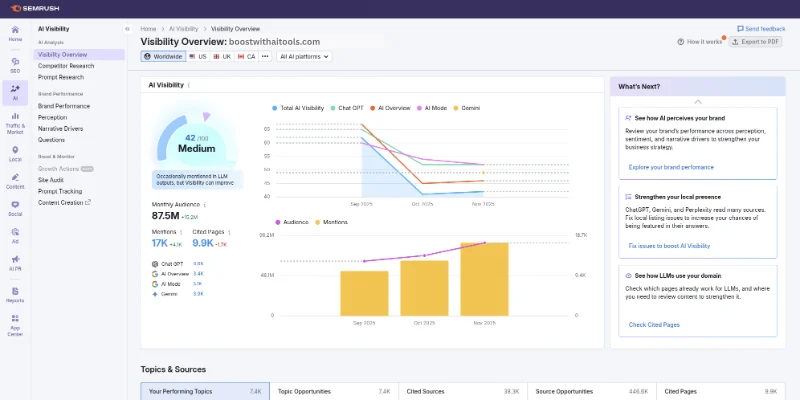
Beyond analysis, it gives actionable ideas to improve content and outperform rivals. This makes it a favorite for agencies and brands aiming to scale efficiently.
Key Features of Semrush:
- Keyword Magic Tool: Find hundreds of related keywords with traffic potential.
- Site Audit: Detect broken links, speed issues, and crawl errors instantly.
- Position Tracking: Monitor how your pages rank daily.
- Content Suggestions: Get topic ideas based on what competitors rank for.
2. Surfer SEO
Surfer SEO focuses on helping content rank faster by analyzing the top-performing pages for any keyword. It guides you on headings, word count, and related terms, showing a live score as you write. You can also audit existing content to identify missing elements that could improve rankings.
This tool saves hours of guesswork, letting writers optimize their work with data-backed suggestions. For anyone who publishes regularly, it turns complex optimization into a simple, structured process.
Let’s see the main features of Surfer SEO.
- Content Editor: Guides you with suggested headings, keywords, and word count.
- Audit Existing Pages: Shows gaps in your current content.
- SERP Analyzer: Compares your article with competitors for better optimization.
3. Mangools
Mangools combines keyword research, rank tracking, SERP analysis, and backlink insights in one easy-to-use platform. Its keyword tool helps you discover long-tail opportunities that have real traffic potential, while its SERP checker shows how competitive results are across locations.
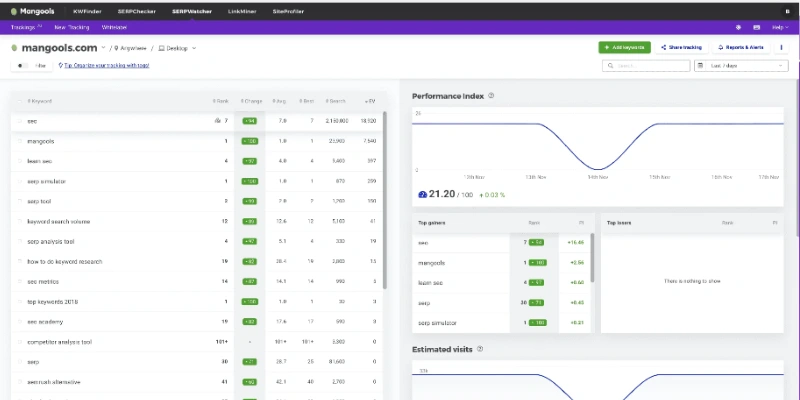
Rank tracking updates let you watch progress daily, and backlink data guides your link-building strategy. Mangools is special for its simplicity and clarity, making it ideal for beginners or small businesses that want essential SEO functions without feeling overwhelmed.
Here are the strengths of Mangools:
- KWFinder: Discover long-tail keywords with realistic traffic potential.
- SERPChecker: See how competitive a keyword is in different countries.
- LinkMiner: Analyze backlinks of competitors.
- Rank Tracker: Watch your rankings move over time.
4. Ahrefs
Ahrefs excels at backlink analysis and uncovering keyword opportunities that competitors might miss. Its Site Explorer shows which pages drive the most traffic, and its Content Explorer highlights trending topics in any niche.
Rank tracking keeps you informed about position changes over time. It also identifies untapped keywords that generate consistent clicks. The tool also provides detailed link metrics, helping you plan outreach strategies that really work.
Here are the key features that make this tool helpful:
- Site Explorer: Analyze any website’s top pages and backlink profile.
- Keywords Explorer: Find high-potential keywords and search volume.
- Content Explorer: Discover trending topics in any niche.
- Rank Tracker: Monitor positions over time.
5. Frase
Frase specializes in turning search insights into actionable content plans. It analyzes top-ranking pages to create briefs that guide your writing. You can discover content gaps, find related keywords, and structure articles for better readability.
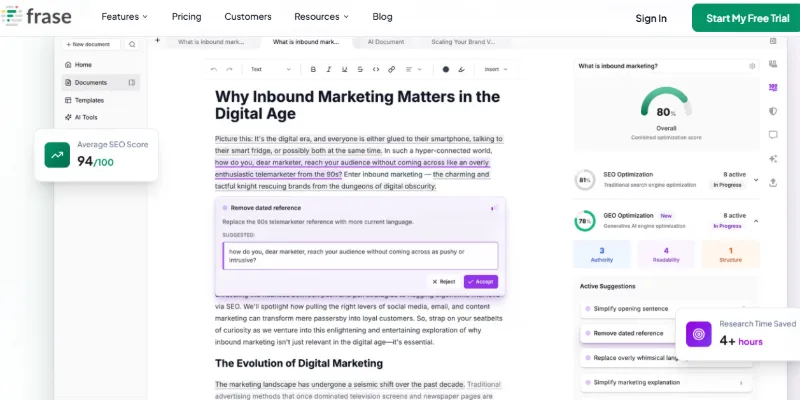
It removes uncertainty in planning posts and ensures every piece targets real search intent. Frase helps writers produce focused content that performs well without wasting hours guessing what Google prefers.
Here are the main features of Frase:
- Content Briefs: Automatically generates outlines based on top-ranking pages.
- Content Optimization: Suggests keywords and topics to add.
- Content Gap Analysis: Finds missing points competitors cover.
- Analytics Integration: Connects with Google Search Console to track performance.
6. Clearscope
Clearscope focuses on optimizing content for relevance and quality. It evaluates your draft against top-ranking pages and suggests related terms and topics to include.
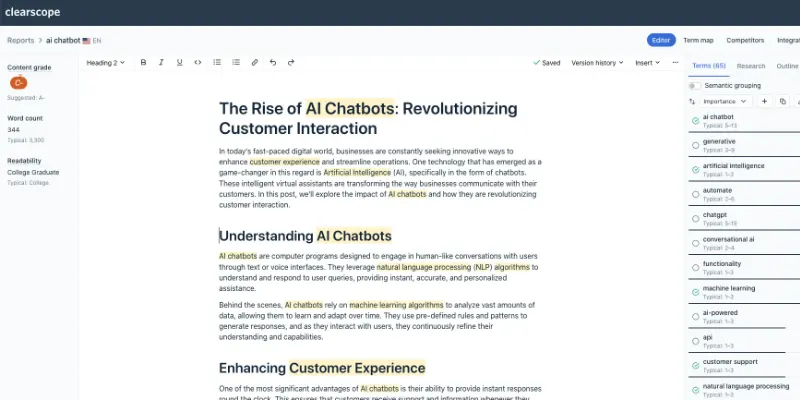
You get a score that reflects how well your content aligns with searcher intent. It helps create content that’s more likely to satisfy readers and rank higher in search results.
Here are the main features Clearscope does well:
- Content Grading: Gives a score for how well your article aligns with search intent.
- Keyword Suggestions: Recommends terms to include for relevance.
- Competitor Insights: Shows topics that top pages cover.
- Content Reporting: Tracks improvements and suggestions over time.
7. RankIQ
RankIQ helps you find long‑term blog keywords that drive steady traffic over time. It analyzes search patterns and suggests terms with achievable competition, specifically for blog posts and content creators.
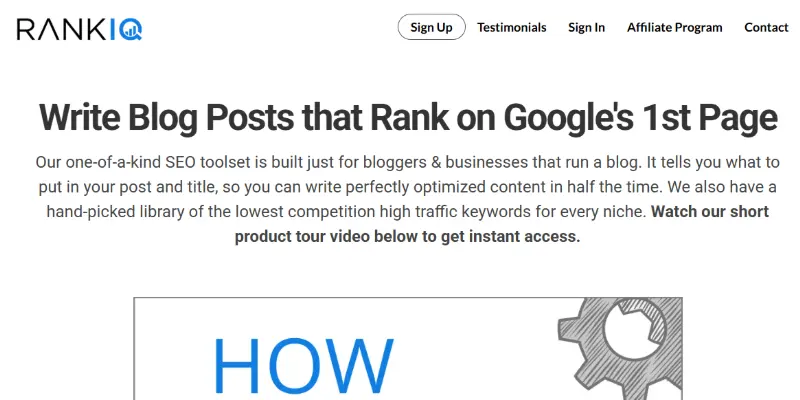
The tool grades your draft against top-ranking pages and gives clear, actionable ways to improve your content. This focus on blog performance makes it ideal for creators who want reliable growth over speed.
Let’s look at the main features of RankIQ:
- Keyword Discovery: Finds blog-specific long-tail keywords.
- Content Grading: Scores drafts against top pages.
- Outline Suggestions: Helps structure articles for clarity and relevance.
- SERP Monitoring: Tracks ranking progress over time.
8. NeuronWriter
NeuronWriter combines search intent analysis with structural guidance so your content matches what people actually search for. It breaks down top-performing pages into sections you can follow, helping you shape outlines that are easy to write and strong in relevance.
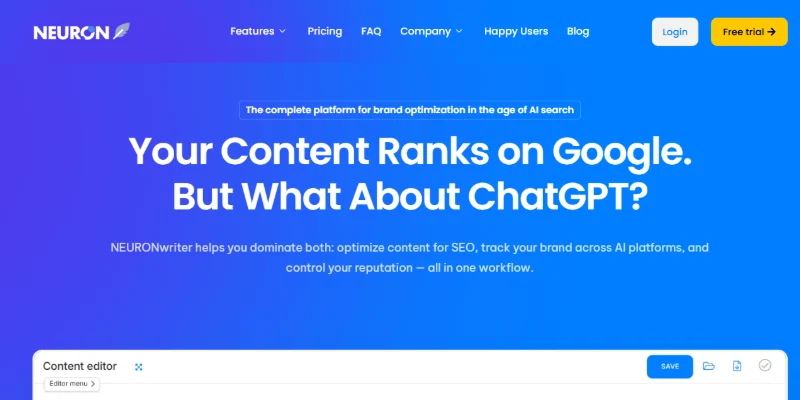
The platform also tracks how your content evolves in search after publishing. It is a fantastic option if you want continuous tracking and planning assistance in one location.
Here are the main features of NeuronWriter:
- Topic Analysis: Shows which subtopics and headings top pages include.
- Content Outlines: Provides ready-to-use outlines to guide writing.
- SEO Suggestions: Highlights keywords and related terms to add.
- Performance Tracking: Monitors changes in search rankings after publishing.
9. SE Ranking
SE Ranking gives you a full view of your website’s SEO performance without complexity. I started using it for a small e-commerce site and quickly spotted keywords and pages that needed urgent attention.
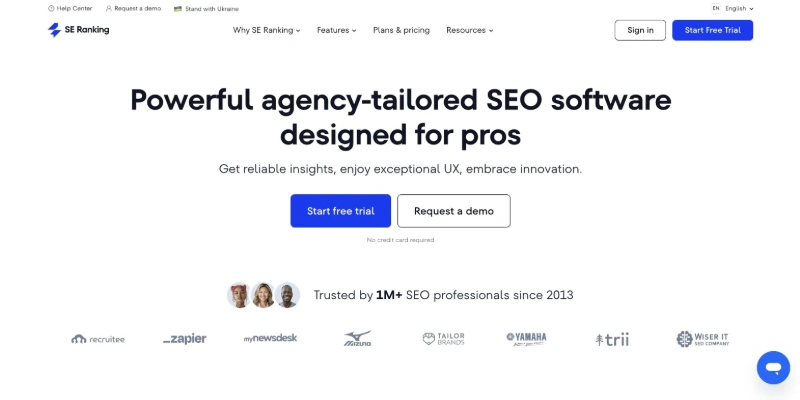
The platform tracks rankings, audits technical issues, and even monitors your competitors’ strategies. It’s a reliable tool if you want actionable insights and continuous tracking in one place.
Let’s see the main features of SE Ranking:
- Keyword Rank Tracker: Monitor keyword positions daily across different search engines and locations.
- Website Audit: Detects broken links, speed issues, and on-page SEO problems.
- Competitor Analysis: Compares your performance with rivals to identify gaps.
- Backlink Monitoring: Tracks new and lost backlinks to manage authority effectively.
10. MarketMuse
MarketMuse focuses on helping you create highly relevant and comprehensive content. It is useful when tackling competitive topics because it analyzes search intent and highlights gaps in your coverage.
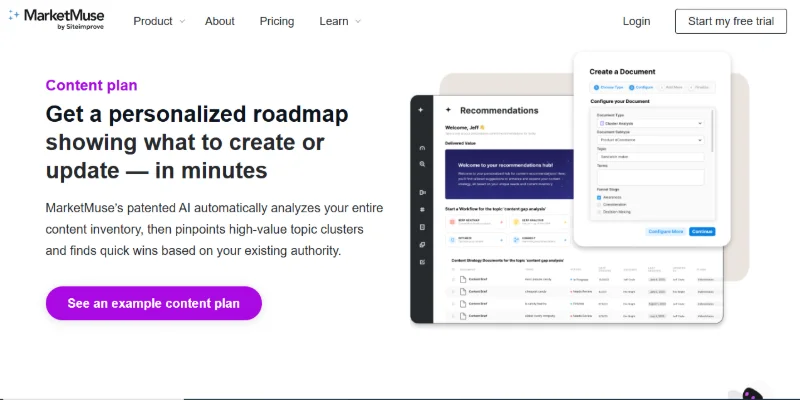
The tool provides suggestions for headings, related keywords, and content structure, ensuring your articles satisfy both users and search engines. It’s perfect for those who want to plan content strategically and optimize continuously.
Here are the key features of MarketMuse:
- Content Inventory: Analyze existing content to identify gaps and opportunities.
- Topic Modeling: Suggests key subtopics and related terms for comprehensive coverage.
- Content Scoring: Grades your draft and shows areas to improve relevance.
- Competitive Analysis: Reveals what top-ranking pages include and what’s missing from your content.
How the SEO Landscape Is Evolving
Over the past few years, SEO work has grown more complex and competitive. I remember spending hours just to find the right keywords for one article. Today, smarter tools help marketers focus on strategy rather than repetitive tasks.
- Keyword Research: You can discover high-potential search terms in minutes instead of hours.
- Content Improvement: Tools suggest ways to make your articles more relevant and readable.
- Automating Tasks: Reports, audits, and data collection happen automatically.
- Competitor Analysis: Compare your site with rivals and spot opportunities quickly.
- Monitoring Trends: Track shifts in search behavior to adjust content before traffic drops.
These changes let you spend more time creating value for your audience while staying ahead of competitors. From my experience, even small improvements in strategy can lead to noticeable growth in traffic.
Conclusion
In this guide, we have covered the best AI SEO tools to give you a clear idea of what works in today’s SEO environment. Every tool shared here solves a real problem that marketers face daily. In my view, using fewer tools with a clear purpose brings more growth than using many without direction.
Thank you for reading until the end, and I appreciate the time you spent here.
Before you leave, check the FAQ section that follows. It includes more insights that may help you further.
FAQs
Here are some frequently asked questions about AI SEO tools. These short answers will help you learn the basics in minutes.
SEO artificial intelligence means using smart systems to understand search data and website performance. It helps beginners see patterns that are hard to spot manually. This makes SEO decisions clearer and faster.
AI for SEO works well for small sites because it saves time and reduces guesswork. It helps identify keywords and content gaps without deep expertise. Many beginners rely on it to build confidence early.
AI SEO optimization analyzes user intent and page structure. It suggests changes that align content with what searchers expect. This improves relevance and visibility over time. Consistent updates strengthen long-term results.
AI for SEO starts by choosing one simple tool. Beginners can begin with keyword suggestions or content audits. Learning one feature at a time avoids confusion. Practice builds understanding quickly.
Free AI SEO tools offer limited access but still teach core SEO basics. They help test ideas before investing money. Many beginners use them as a learning step. They work well for small projects.
Tools for SEO ranking provide insights, not promises. Rankings depend on competition and content quality. Tools only guide smarter actions. Patience remains essential for growth.
Start by picking an SEO optimization tool that fits your experience and website needs. Among the best tools for SEO, simple features and easy dashboards help beginners learn faster. Using one tool regularly works better than changing tools again and again.





- Be Respectful
- Stay Relevant
- Stay Positive
- True Feedback
- Encourage Discussion
- Avoid Spamming
- No Fake News
- Don't Copy-Paste
- No Personal Attacks
- Be Respectful
- Stay Relevant
- Stay Positive
- True Feedback
- Encourage Discussion
- Avoid Spamming
- No Fake News
- Don't Copy-Paste
- No Personal Attacks
