7 AI Tools for Content Writing That Replace Manual Writing
Published: 18 May 2026
Content creation has changed a lot over the last few years. Earlier, writing a single blog post required hours of research, outlining, editing, and formatting. Now, AI tools can handle a big part of that workload and help writers focus more on creativity and strategy instead of repetitive tasks.
But here’s something many articles do not mention clearly. Not every AI writing tool actually saves time. After testing different platforms for blog writing, SEO content, and marketing copy, I noticed that each tool works better for a different type of user.
Some are excellent for long-form articles. Others work better for social media content, email writing, or SEO optimization. So instead of picking the most hyped tool, it is smarter to choose one that actually fits your content style and workflow.
In this guide, I’ll share the best AI tools for content writing in 2026, their strengths, limitations, and which type of creators can benefit from them the most.
What Are AI Tools for Content Writing?
AI blogging tools are software platforms powered by machine learning and natural language processing. They analyze prompts, context, and user intent to generate written content in seconds.
These tools can assist with:
- Blog writing
- SEO content creation
- Social media captions
- Ad copy
- Product descriptions
- Email marketing
- Content rewriting
- Grammar correction
- Keyword optimization
Most modern AI content generators use advanced language models trained on massive datasets. They predict natural-sounding text based on the information provided by the user.
Instead of writing every sentence manually, creators can use AI-powered writing assistants to brainstorm ideas, structure articles, and improve workflow efficiency.
How AI Writing Tools Work
AI content software relies on algorithms that understand patterns in human language. When users enter a prompt, the system analyzes context and generates relevant text predictions.
For example, if you ask an AI blog writer to create an introduction about digital marketing, it studies millions of writing examples and produces readable content that matches the topic.
Many tools also include features like the following:
- Tone adjustment
- SEO scoring
- Plagiarism checking
- Content templates
- Keyword recommendations
- AI paraphrasing
- Readability analysis
Some platforms specialize in long-form article generation, while others focus on short marketing copy or editing assistance.
Best AI Tools for Content Writing
AI writing tools can help with blog writing, SEO optimization, marketing copy, editing, and content planning. Below, we’ll explore some of the best AI tools for content writing to help you choose the right option.
1. OpenAI ChatGPT
OpenAI ChatGPT is probably the AI writing tool I end up using the most because it feels more flexible compared to many template-based platforms. Instead of forcing you into fixed workflows, it allows you to write naturally, ask follow-up questions, rewrite sections, or even brainstorm ideas like a real conversation.
It adapts well to different writing styles. Whether you want a casual blog tone, professional business content, or SEO-focused writing, you can guide the output quite easily with better prompts.

That said, I would never recommend publishing raw ChatGPT content directly. Some paragraphs can still sound generic or overly polished. The content becomes much better once you add personal opinions, examples, and manual editing.
2. Jasper AI
Jasper feels more business-focused compared to ChatGPT. When I tested it for marketing copy and branded content, I noticed it performs better for structured workflows like email campaigns, ad copy, and landing pages.
One feature that stands out is brand voice customization. This becomes really useful for agencies or businesses that want a consistent tone across all their content. Instead of rewriting everything manually, the tool tries to maintain the same writing style automatically.
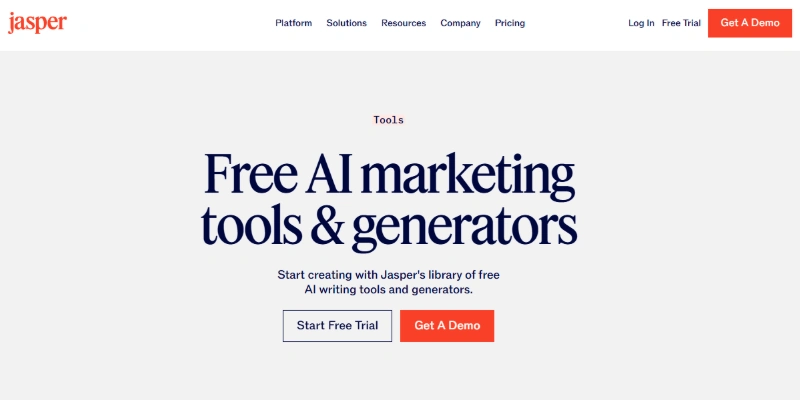
Jasper works better when the prompts are clear and detailed. If you provide proper context, the output quality improves a lot. For short marketing content, especially, it can speed up production significantly.
The only downside is pricing. For beginners or casual bloggers, it may feel expensive compared to some alternatives. But for businesses creating content regularly, the workflow features can justify the cost.
3. Copy.ai
Copy.ai is one of the easiest AI writing tools to use, especially for beginners. The interface is simple, and you can generate content ideas quickly without spending too much time learning the platform.
When I tried it for social media captions and product descriptions, the outputs were surprisingly decent for quick marketing tasks. It works best for short-form content rather than detailed long-form blog articles.
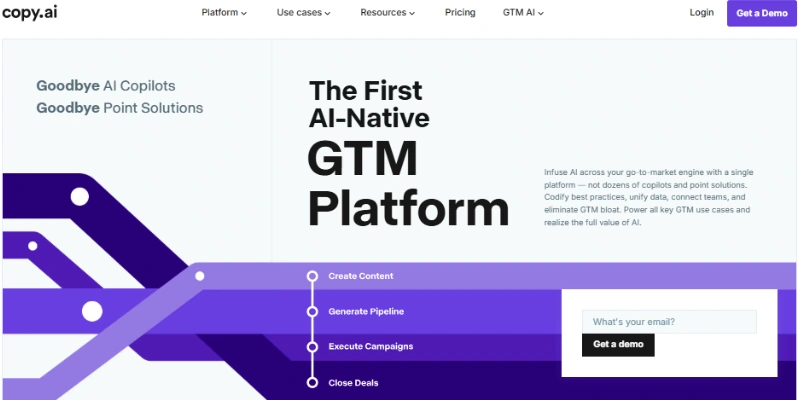
I think e-commerce businesses and social media managers would benefit the most from this tool because it speeds up repetitive content tasks. Instead of writing dozens of captions or product descriptions manually, you can generate multiple variations within minutes.
However, for in-depth SEO blog writing, I still prefer tools like ChatGPT or Writesonic because they provide more flexibility and a stronger long-form structure.
4. Writesonic
Writesonic is one of the better options for SEO-focused content writing. I tested it mainly for blog generation and keyword-based articles, and it definitely feels designed for bloggers and affiliate marketers.
One thing I noticed is that Writesonic tries to structure content in a search-friendly way automatically. Headings, readability, and content flow usually come out better compared to many basic AI generators.

It is also useful for generating website copy, landing pages, and e-commerce content. If you manage niche sites or publish content regularly, it can reduce drafting time quite a bit.
Still, like every AI writing platform, the final quality depends heavily on editing. The articles become much stronger once you add personal insights, examples, and manual optimization.
5. Grammarly
Grammarly is slightly different from the other tools on this list because it focuses more on improving existing writing instead of generating complete articles from scratch.
Honestly, I still use Grammarly regularly even when I write content manually. It catches awkward sentences, grammar mistakes, and readability issues that are easy to miss during editing.
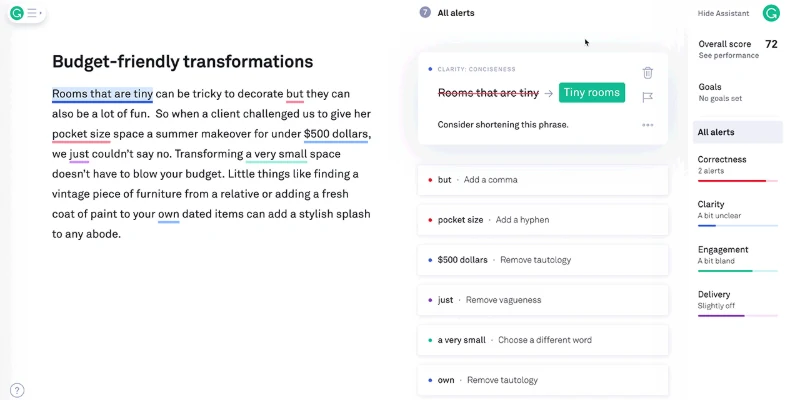
The AI suggestions also help simplify complicated paragraphs without making the content sound robotic. For emails, client communication, and blog editing, it works surprisingly well.
I would not rely on GrammarlyGO for full article generation, but as an editing assistant, it is genuinely useful for making content cleaner and easier to read.
6. Surfer SEO
Surfer SEO is more SEO-focused than most AI writing tools. When I first tried it, the biggest difference I noticed was how heavily it relies on competitor analysis and keyword optimization.
Instead of only generating content, it guides you on content structure, semantic keywords, headings, and readability based on top-ranking pages. For SEO writers, this can be extremely useful during content optimization.
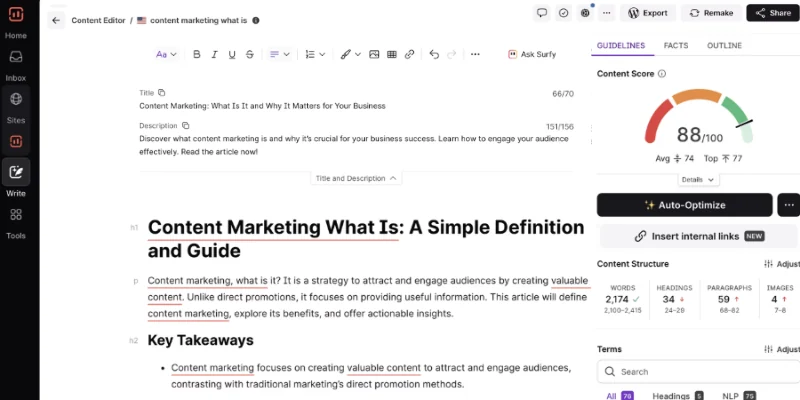
I think Surfer AI works best for bloggers targeting organic traffic and search rankings seriously. It is not the tool I would use for casual creative writing, but for SEO content strategy, it is one of the strongest options available.
The learning curve is slightly higher compared to beginner-friendly AI writers, but once you understand the workflow, it becomes much easier to optimize articles properly.
7. Quillbot
QuillBot is mainly focused on rewriting and improving existing content rather than generating full articles from scratch.
Instead of acting like a full AI content writer, it works more like a smart editing assistant. It helps with paraphrasing, summarizing, grammar correction, and making sentences clearer and more readable, especially when your draft feels repetitive or awkward.
I think QuillBot works best for students, bloggers, and editors who already have content and just want to refine it. It is not ideal for building complete long-form blog posts, but for improving quality and readability, it performs really well.
The tool is very easy to use compared to advanced SEO platforms, so beginners can quickly learn how to rewrite and polish their content without a steep learning curve.
Why Writers Are Using AI Content Tools
One reason AI writing tools became so popular is simple. Content demands are increasing everywhere. Bloggers need consistent articles, businesses need website copy, e-commerce stores need product descriptions, and marketers constantly need fresh content ideas.
Doing all of that manually becomes exhausting very quickly.
AI tools help speed up the following:
- Content research
- Blog outlining
- Headline generation
- SEO optimization
- Grammar correction
- Content rewriting
- Idea brainstorming
For freelancers and small teams, especially, these tools can reduce workload significantly.
Are AI Writing Tools Worth It?
Honestly, yes, but only if you use them correctly.
AI writing software can save a huge amount of time during brainstorming, outlining, drafting, and editing. But expecting these tools to replace human creativity completely usually leads to low-quality content.
The best articles still come from real opinions, personal experiences, and proper editing.
That is why I see AI more as a productivity tool rather than a complete replacement for writers. It handles repetitive tasks faster, while humans still shape the final quality and originality of the content.
Conclusion
In this guide, we’ll explore AI tools for content writing and understand how they are changing the way bloggers, marketers, and businesses create content. We have seen how different tools work for different purposes, from generating blog posts and SEO content to improving grammar, rewriting sentences, and managing full content workflows.
At the end, the main point is simple: AI tools are not here to replace writers but to support and speed up the content creation process. The best results always come when you combine AI assistance with your own creativity, editing skills, and real human understanding.
If you are starting your journey with AI writing tools, the best approach is to experiment with a few tools, understand their workflow, and then choose the one that fits your content style and goals.
FAQs
Here are some common questions about AI tools for content writing.
AI tools for content writing are software applications that help users create, rewrite, and optimize content using artificial intelligence. They are widely used for blogs, social media posts, emails, and SEO content. These tools save time by generating ideas and drafts quickly.
For beginners, tools like ChatGPT and Copy.ai are the easiest to use because they do not require technical knowledge. They offer simple interfaces and quick content generation features.
- Easy to learn
- Fast content creation
Yes, many AI SEO tools help improve keyword usage, content structure, and readability. They guide you in creating SEO-optimized articles that match search intent. However, human editing is still important for the best ranking results.
Some AI writing tools offer free versions, but most advanced features are available in paid plans. Free versions are usually limited in word count or functionality. Paid plans provide better AI models and SEO features.
Tools like Surfer SEO and Writesonic are widely used for SEO content writing. They help with keyword optimization, competitor analysis, and content scoring.
- Strong SEO features
- Better ranking support
AI writing tools can assist writers but cannot fully replace human creativity. Human writers add emotion, experience, and originality that AI cannot fully replicate. The best results come from combining both.
AI writing tools generate new content from scratch, while paraphrasing tools focus on rewriting existing content. For example, QuillBot is mainly used for rewriting and improving sentences. Both are useful for different stages of content creation.
Yes, AI tools for bloggers are very helpful for creating outlines, drafts, and SEO-optimized content. They make blogging faster and more consistent. However, final editing is necessary to maintain quality and originality.





- Be Respectful
- Stay Relevant
- Stay Positive
- True Feedback
- Encourage Discussion
- Avoid Spamming
- No Fake News
- Don't Copy-Paste
- No Personal Attacks
- Be Respectful
- Stay Relevant
- Stay Positive
- True Feedback
- Encourage Discussion
- Avoid Spamming
- No Fake News
- Don't Copy-Paste
- No Personal Attacks
